jueves, 19 de mayo de 2016
3rd term
I have been helping my classmates Miren, Jonan and Olatz. Miren and Jonan asked me to translate their part and I search some links for Olatz.

martes, 3 de mayo de 2016
MIREN
My part was doing a power point about different faces of the climate change. I did a power point of twenty slides in which I explained what it is, how it is caused and different measures countries are taking to avoid bigger problems caused by global warming.
First, I search different pages on the internet to find general information about this theme. Then, I look for coferences governments have done to solve the problem, for example COP21, Rio declaration and Kyoto protocol. After that, I look for some types normal people can follow to reduce their diary pollution. Finally I put all the information I found in a power point and three of my classmates presented in front of third DBH students.
Olatz helped me translating the power point to spanish and Nerea and Uxue did a pecha cucha, another power point without text to present in front of people.
Nire lana power point bat egitea zen aldaketa klimatikoaren inguruko gai desberdinak azalduz. Hogei diapositibako power point bat egin nuen, non zer den, zerk eragiten duen, eta saihesteko hartzen ari diren neurriak azaltzen ditudan.
Lehenik eta behin, interneten klima aldaketaren inguruko informazio orokorra bilatu nuen. Ondoren arazoa konpontzen saiatzeko egin diren konferentziei buruzko informazioa bilatu nuen, adibidez COP21 eta Kyoto eta Rioko konferentziak. Gero, jendeak etxean gutxiago kutxatu ahal izateko jarraitu ditzakeen aholku batzuk aurkitu nituen eta azkenik, lortutako informazioa power point batean bildu nuen. Behin power pointa amaiturik, hiru klaseko kidek hirugarren DBHko ikasleen aurrean aurkeztu zuten power pointa.
Olatzek aurkezpena gaztelerara itzultzen lagundu zidan eta Nerea eta Uxuek petxa kutxa bat egin zuten, hau testurik gabeko aurkezpena jendearen aurrean aurkezteko.
First, I search different pages on the internet to find general information about this theme. Then, I look for coferences governments have done to solve the problem, for example COP21, Rio declaration and Kyoto protocol. After that, I look for some types normal people can follow to reduce their diary pollution. Finally I put all the information I found in a power point and three of my classmates presented in front of third DBH students.
Olatz helped me translating the power point to spanish and Nerea and Uxue did a pecha cucha, another power point without text to present in front of people.
Nire lana power point bat egitea zen aldaketa klimatikoaren inguruko gai desberdinak azalduz. Hogei diapositibako power point bat egin nuen, non zer den, zerk eragiten duen, eta saihesteko hartzen ari diren neurriak azaltzen ditudan.
Lehenik eta behin, interneten klima aldaketaren inguruko informazio orokorra bilatu nuen. Ondoren arazoa konpontzen saiatzeko egin diren konferentziei buruzko informazioa bilatu nuen, adibidez COP21 eta Kyoto eta Rioko konferentziak. Gero, jendeak etxean gutxiago kutxatu ahal izateko jarraitu ditzakeen aholku batzuk aurkitu nituen eta azkenik, lortutako informazioa power point batean bildu nuen. Behin power pointa amaiturik, hiru klaseko kidek hirugarren DBHko ikasleen aurrean aurkeztu zuten power pointa.
Olatzek aurkezpena gaztelerara itzultzen lagundu zidan eta Nerea eta Uxuek petxa kutxa bat egin zuten, hau testurik gabeko aurkezpena jendearen aurrean aurkezteko.
lunes, 2 de mayo de 2016

viernes, 29 de abril de 2016
my part
Here you can see my part for the contest:
https://drive.google.com/file/d/0B6-0qBusMGRaeFFOd25JODJ2aFk/view?usp=sharing
Hemen lehiaketarako nire zatia ikusi dezakezue:
https://drive.google.com/file/d/0B6-0qBusMGRaOVoyLXFieWhuaWM/view?usp=sharing
Aquí podéis ver mi parte para el concurso:
https://drive.google.com/file/d/0B6-0qBusMGRaRElTMkQ0emQ4OUU/view?usp=sharing
Here you can see the pecha cucha:
https://docs.google.com/presentation/d/1WH8gdlJxdM-UFG2vSjfo0QzmyRJyRXaXSCqlgNtHcRo/edit?usp=sharing
https://drive.google.com/file/d/0B6-0qBusMGRaeFFOd25JODJ2aFk/view?usp=sharing
Hemen lehiaketarako nire zatia ikusi dezakezue:
https://drive.google.com/file/d/0B6-0qBusMGRaOVoyLXFieWhuaWM/view?usp=sharing
Aquí podéis ver mi parte para el concurso:
https://drive.google.com/file/d/0B6-0qBusMGRaRElTMkQ0emQ4OUU/view?usp=sharing
Here you can see the pecha cucha:
https://docs.google.com/presentation/d/1WH8gdlJxdM-UFG2vSjfo0QzmyRJyRXaXSCqlgNtHcRo/edit?usp=sharing
jueves, 10 de marzo de 2016
Global warming
Global Warming is the increase of Earth's surface temperature due to effect of greenhouse gases, such as carbon dioxide emissions from burning fossil fuels or from deforestation, which trap heat that would otherwise escape from Earth.
>You can find information about Cop 21 in these links:
http://www.cop21paris.org/about/cop21/
http://newsroom.unfccc.int/es/el-papel-de-la-naturaleza/
http://newsroom.unfccc.int/es/bienvenida/final-cop21/
>General information about european global warming:
http://www.eea.europa.eu/es/themes/climate
http://climaticocambio.com/un-nuevo-informe-de-la-aema-confirma-que-el-cambio-climatico-en-europa-se-acelera/
http://ecodiario.eleconomista.es/europa/noticias/3844850/03/12/Europa-se-adapta-frente-el-cambio-climatico.html

THIRD TERM
During
the second term, we have improved doing presentations and working in
small groups of four people. We have learnt a lot about different medical issues as you can see on our web. We have also learnt about genetics and how to mantain a healthy lifestyle.
jueves, 25 de febrero de 2016
Stop war
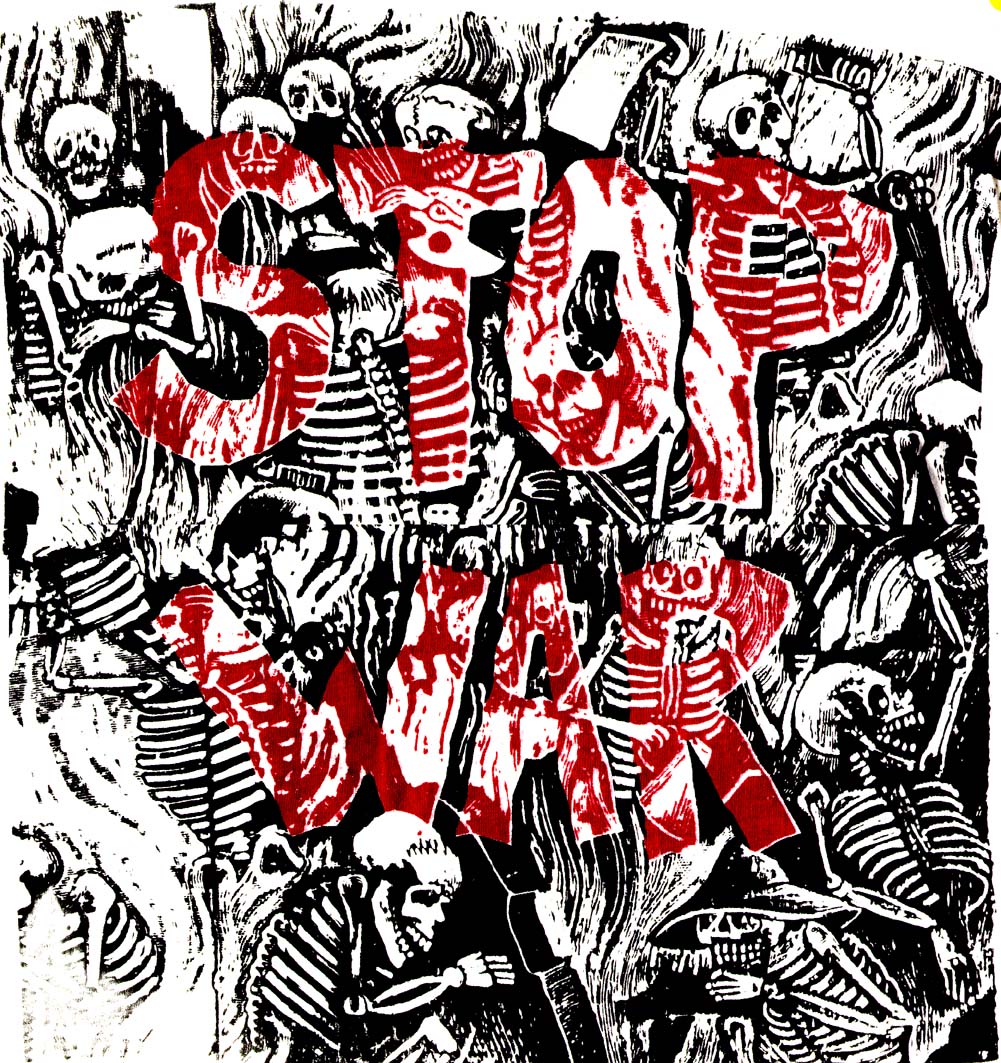


A war is an armed conflict between societies that it only causes dentruction and suffering. It is a cycle, one war leads to another war, and we can't avoid it. The only way to avoid it, would be to die out or maybe in the future changing the mentality of all the society.
Who want power invest money to prepare an army and weapons, but when some people are becoming powerful, others are becoming poorer and planet suffers their ambition. War doesn't affect only in humans, it destroys also the environment and living beings.
jueves, 4 de febrero de 2016
Migration


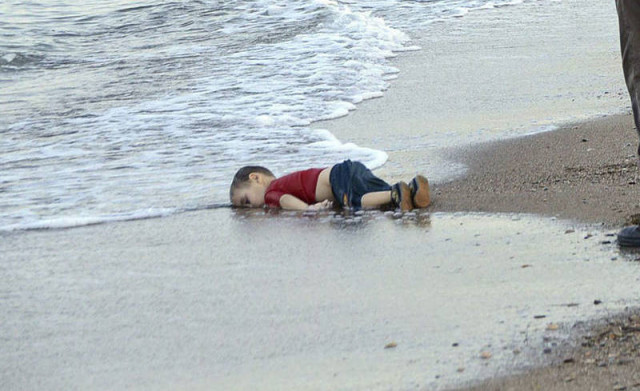
In these photos we can see how migration affect humans in different ways, they can loose their family, their house, or their lifes. Everyday, thousand of people emigrate risking their lifes, trying to survive and to avoid war.
jueves, 14 de enero de 2016
jueves, 26 de noviembre de 2015
SECOND TERM
During the first term, we have improved doing presentations and working in small groups of two people. We have learnt a lot about the Solar System, the creation of life, human evolution and tectonic plates. I am very exited about the team work we will be doing this term.
viernes, 13 de noviembre de 2015
PechaKucha: Origin of life
- Hello, we are going to speak about the origin of life pointed from the religious myths and scientific theories. There are a lot of different myths because each culture has tried to explain our origin in their own way.
- For example, the maya myth says that the Popol Vuh (their god) created animals first, then wet clay, wood, and after that he created the first ancestors from maiz dough
- In china, there is another myth: in the beinning the universe was a chaos. A cosmic egg appeared and the egg was divided into three parts. From one part was created the sky, from another part was created the earth and from de inside art of the edd was created Pangu, a primitive human beeing
- One of the religious theories about the origi of life is the creationism. This theory says that God created heaven and Earth in seven days an then Adam and Eva were send to that paradise to develop the human being.
- In the Islam, another god, Alah; created the univerese in six long spans of time. In a lot of religions we can see myths and gods who were created to explain the things that we couldn´t explain using science.
- Jainism: this religious theory says that there is no creator, They feel that no single beimg exists who could create the world and they question and critizise how an immaterial God could create a material planet.
- Sikhism: Sikhs believe that God created the whole universe. Earth while being in the universe is a creation of God and all the life on Earth is a creation of God. It doesn't matter to a Sikh whether Earth was created in seven days or in 4 billion years.
- Scientifically, the first living matter is considered to be the first cell that could do all the life functions: feeding, reproducting and relating to other cells or the environment. As you can see in the picture, the first cell was very simple, the DNA was not in a nucleus yet.
- Panspermia is a scientific theory which says that life was created in Mars and an asteroid brought it to Earth, so we all are Martians originally. This theory was proposed by Herman Von Helmholtz.
- According to the theory of the simple begginings the life might have begun with small molecules that interacted with each other and became more complex, like RNA or DNA. so the RNA wouldn´t be the first gene molecule.
- RNA world: this theory says that RNA was spontaneously arisen on Earth and it was developped into DNA, but although some scientists think that molecules could have spontaneously arisen on Earth, others say thtat was very unlikey to have happened.
- There is another scienifical theory, called the chilly start. It says that the oceans might have been covered by ice. The ice might have protected the molecules and allowed them to react and they became more complex.
- Deep.sea vents: life was created at submarine hydrothermal vents because this places are very rich in chemical and thermal energy. The rocky nooks could have concentrated hydrogen molecules and provided mineral catalysts for electrical reactions.
- Then, the comunity clay theory defends that the first molecules were met on clay because it had a lot of organic compounds and helped them to organize like our genes do. So the clay woud have been an appropiate place for the begining of life.
- Electric spark: the compounds of the reducing atmosphere reacted with the energy of an electric spark and the first organic molecules were created. The scientist Miller-Urley did an experiment to prove this theory.
- The abiogenesis is how we call scientifically the origin of life. "A" means none, "bio" means life and "genesis" means beggining and it was suposed to happen after the Big-Bang and the creation of the univerese and the planets, in the primordial soup and then the life was developed.
- Abiogenesis is the natural process of life arising from non living matter. It happened more or less 4 billion years ago when the first organic compounds or cells reacted and gave rise to a living system.
- Oparin was a Russian biochemist who was interested in the origin of life. He reviewed some panspermia theories but he didn´t think that was possible so he worked on a new theory with Haldane and made an experiment (similar to Miller-Urley´s)
- John Burdon Sanderson Haldane was a British-Indian scientist who developped the theory of "Primordial Soup".This theory says that the origin of life on Earth consists on transformation of molecules.
- Louis Pasteur was a French chemist and microbiologist. His principles discoveries were vaccination, microbial fermentation and pasteurization. With his experiments he prooved that life couldn´t arise spontaneously.
jueves, 1 de octubre de 2015
Irène Joliot-Curie

Iréne Joliot-Curie was born on 12 September 1897 in Paris, France. She was the daughter of Marie Curie and a scientist, like her mother. She is known because she discovered artificial radioactivity and she won a Nobel price because of her discovery. She studied on Collège Sévigné for two years and then onto the Faculty of Science at the Sorbonne but her studies were interrupted by the WWI. After the War, Curie returned to Paris to study at the Radium Institute, which had been built by her parents. Curie became Doctor of Science in 1925. During WWII Joliot-Curie got tuberculosis and was forced to spend several years convalescing in Switzerland. To make the situation easier she left her husband and children in France and it was hard to visits back to France, enduring detention by German troops at the Swistzerland border on more than one occasion. Finally, in 1944 Joliot-Curie judged it too dangerous for her family to stay in France and she took her children back to Switzerland. In 1956, after a final convalescent period in the French Alps, Joliot-Curie was admitted to the Curie hospital in Paris, where she died on 17 March at the age of 58 from leukemia.
Mass media & science
I think that mass media are doing a
great job showing the reality of this world to all the people. But
sometimes they forget the news too fast, when another problem comes
up they forget the importance of the old one.
Section
|
Frecuency
|
Extension
|
Generic themes
|
Pseudoscience
|
|
Noticias de Guipuzkoa
|
Sub-section:
internet and science
|
1
per week
|
1
page
|
Sports
technology, health, economy
|
No
|
El pais
|
Yes
|
Every
day
|
1
page
|
Science,
technology, sport
|
Horoscope
|
La razón
|
Sub-section:
“a tu salud”
|
1
per forthnight
|
½
page
|
Culture,
religion, society
|
|
Berria
|
No
|
-------
|
-------
|
Society,
relevant news
|
No
|
ABC
|
Sub-section:
technology
|
Every
day
|
?
|
Relevant
news
|
No
|
Gara
|
Yes
|
Every
day
|
½
page
|
Relevant
news
|
No
|
Vanguardia
|
No
|
-------
|
-------
|
Sport,
technology, life
|
No
|
Political new
Jeremy Corbyn says Labour's Trident stance may remain unclear for some time yet
Mr Corbyn is opposed to nuclear weapons but his party is presently committed to renewing the Trident system, which is based on the Clyde. The Trident system is a method for fishing with advanced technology and Clyde is a global company wich it works in fishing among other things.
Jeremy Corbyn has said Labour may have to go into next year's Holyrood elections without having a clear position on Trident.The Holyrood election will take place in May of next year when Scottish Labour, now led by Kezia Dugdale will be defending 38 seats.
martes, 29 de septiembre de 2015
Plastic in fish highlights need for cleaner Thames
Up to three-quarters of fish sampled from the River Thames have been found to have plastic fibres in their gut.
 The Port of London Authority (PLA) has launched a campaign to raise awareness of the curse of litter.It wants public support to stop plastic from getting into the Thames.The PLA has teamed with other groups, including the charity Thames21, to ask people to "Do The Right Thing" and make sure any rubbish they have goes securely into a bin.The PLA has 16 barges positioned on the river to catch floating debris. Called "passive driftwood collectors", these devices are catching plastic.Of course, much of the plastic debris is not being caught, and is simply going out to sea to add more problems of waste in our oceans.
lunes, 14 de septiembre de 2015
Scientific culture
This year, I expect to improve my english and learn new things about science and english.
Suscribirse a:
Entradas (Atom)